Digital Pipeline
I used to think of knowledge representation approaches as a spectrum. Now, I look at them as a pipeline. In her article, Systems for Organizing, Jessica Talisman refers to these sorts of systems as knowledge organization systems (KOS).
When you are talking about artificial intelligence, it is very important that you understand two key details and distinguish between (a) the type of artificial intelligence you are talking about and (b) the problem that you are trying to solve. The point here is that not all artificial intelligence is the same and not all problems are the same. If you do not understand this, I highly recommend that you read Jessica Talisman's article (i.e. System for Organizing).
As Talisman points out in her article; metadata, taxonomy, thesaurus, schema, ontology, and knowledge graph work together as she describes:
"Metadata establishes identity, taxonomy imposes hierarchy, the thesaurus maps equivalence and association, the schema enforces structural validity, the ontology enables reasoning, and the knowledge graph integrates them into a unified, queryable whole."
Tying all this to how I have been looking at these things; I seem to be on the same page as Talisman which is good because Talisman is a knowledge engineer and I am an accountant. Talisman seems to be implying the notion of a controlled vocabulary in that paragraph above. A controlled vocabulary is mentioned explicitly in the article. When I describe that paragraph that Talisman provides, I use the term theory. Others I respect have criticized the use of that term theory to describe what I am trying to describe. But I used the term theory for two reasons. First, others used the term "ontology" and ontology does not enforce structural integrity. Second, I was unaware of the term knowledge organization system. Further, I would encourage the use of global open industry standards to represent your knowledge organization system.
When all these pieces are put together correctly and effectively; the result can be a "digital pipeline" or a "digital ecosystem" that can be used to make "work" or the tasks and processes that make up the workflow used to perform that work better, faster, and/or cheaper.
This is particularly good for accounting related workflows and other industrial processes where there is zero tolerance for error. Nicholas Figay, per his manifesto Inhabiting Babel, also seems to be on this page. Others seem to also be on this same page.
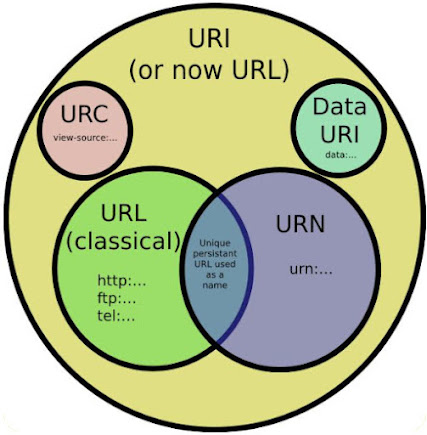
One other thing that is important in a scalable digital pipeline is the use of the international resource identifier (IRI). What this enables is the ability to express meaning with global context.
There are a number of different ways to implement your digital pipeline. Make sure you have maximized your digital proficiency as you take on this work.
A financial reporting framework like US GAAP or IFRS is a purposeful arrangement of knowledge. That purposeful arrangement is represented using tools like metadata, taxonomies, thesaurus, ontology, schemas, knowledge graphs. The FASB and IFRS Foundation are not currently particularly adept at using those tools yet so the current representations in XBRL are semantically impoverished. But eventually they will get where they really need to be. Currently, both the US GAAP and IFRS XBRL Taxonomies look and act more like a "pick list" created for humans to grab "tags". Accountants becoming master craftsman at representing this information digitally takes time. So don't be misguided in your thinking. Over time, the skills and experience of accountants will improve. Eventually, US GAAP and IFRS representations in digital form will be improved significantly.

Additional Information:


Comments
Post a Comment